
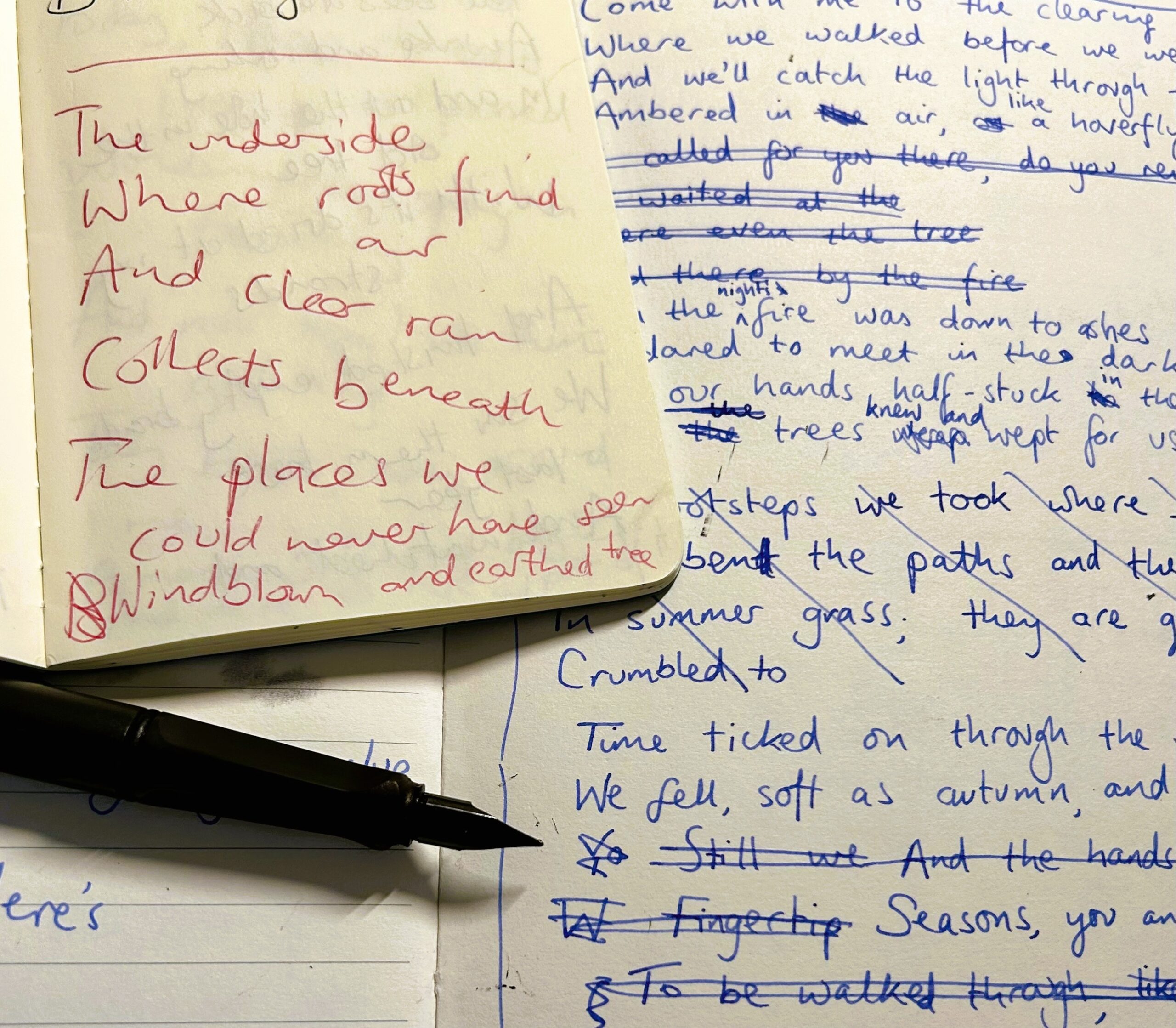
Here are examples of my work from several different projects.
The collection: From Calder Wood
I was invited to be part of a very special project, celebrating the Calder Wood in West Lothian. At the Burgh Halls in Linlithgow, the exhibition “Calder Wood, contemporary perspectives on an ancient woodland” had some of my works on display, inspired by this magical landscape. I collaged my words on to photographs I took there. Here are a few examples.

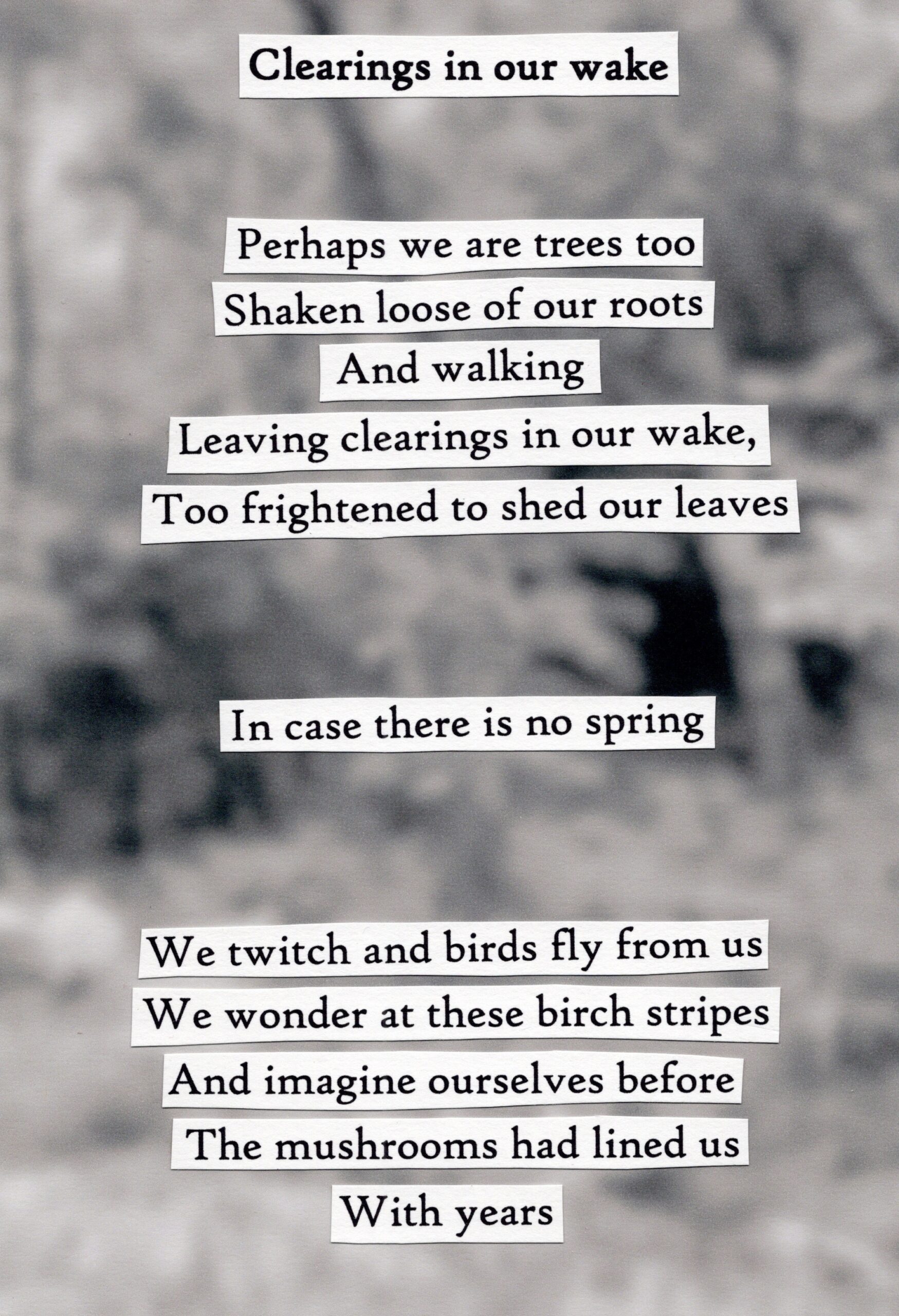
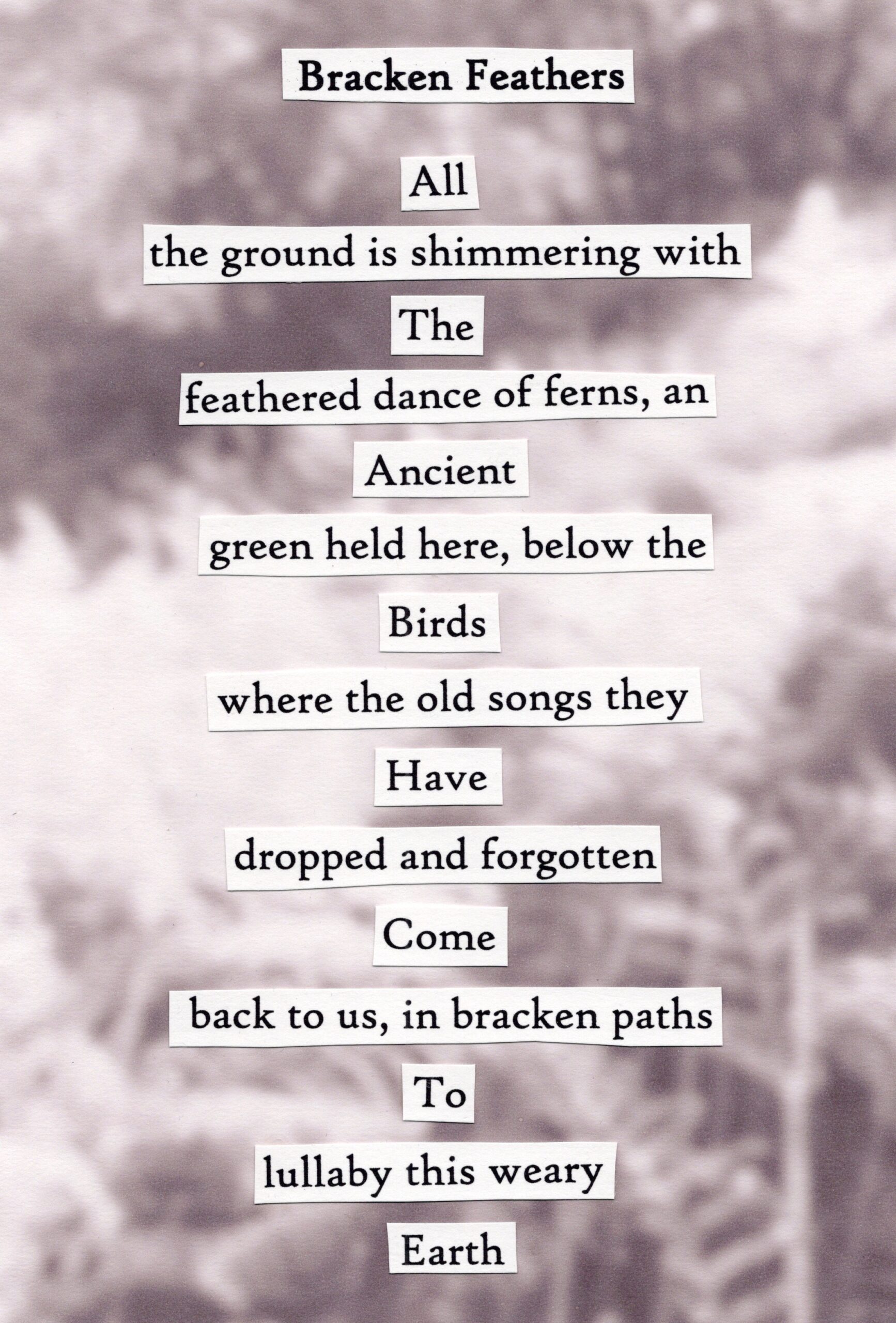
These are from a collection you can buy as a book, if you’d like to read a whole lot more.
Playing with words – The Rule Book
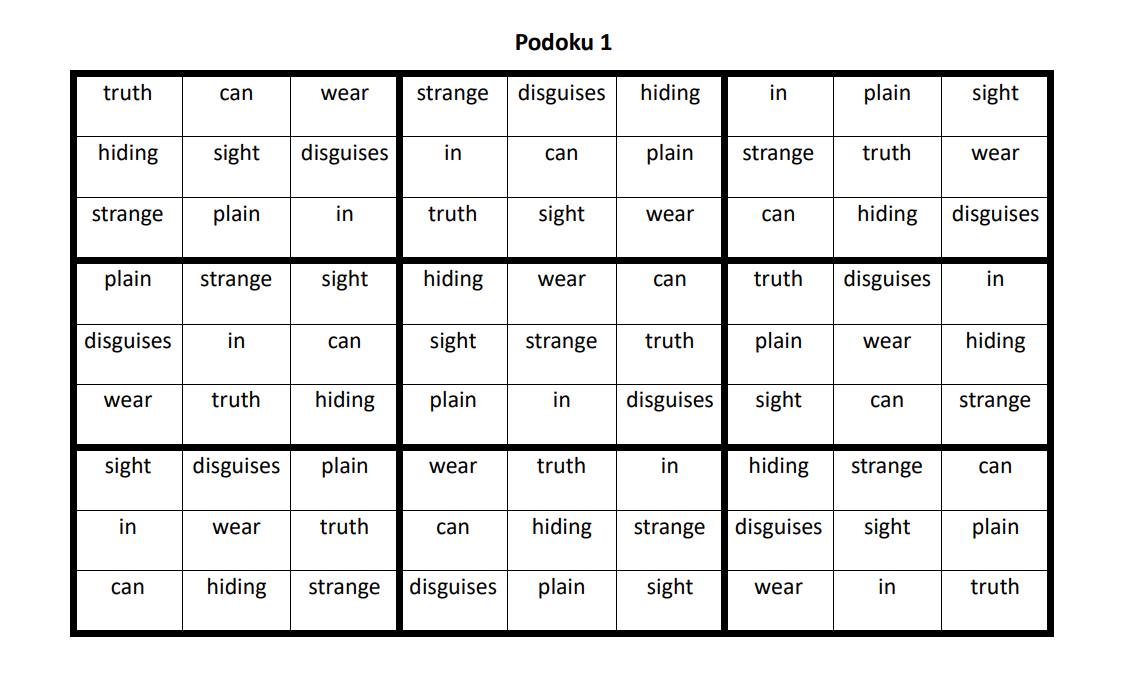
In this project, created for Edinburgh’s Hexagon Collective, I made up my own sets of rules for a whole lot of different types of poetry. Reversals, poems mixed up with Sudoku, avoiding the letter E, a Fibonacci poem, alphabetising, that kind of thing. By the way, if you’re interested in all these poetic games, you can also buy the book.
Alphabetical

Aim high, they said,
Be bold
Seems like their words
Despair of me, but still
Eventually, they’ll quiet, the
Effort too much to sequence my
Genome of silent rebellion – their golden
Age of command disintegrating into
Isotopes too unstable to wield. Therefore,
Jailbreaks are inevitable now, if anyone
Cared. Marauding lines of poetry test their
Eloquence on baffled readers,
Embarrassed to admit defeat, pretending to be
Entertained, their eyes drifting
Over there – anywhere but here, attention
Petering out. Be bold, they said, how
Cute. Aim high, they said, but who
Are they kidding? I said,
Essentially: no one. So, I’m off the
Team. My aim was low – it was a
Unanimous decision, they said, in tones
Veering towards the nasty, but if you
Double your efforts, they continued, you can
Expect to be invited back. One day.
Why would I want to do that, though? I
Said, not out loud.
Missing

Nothing obvious about this
Conscious of what I was
And all that I am not now
A vacancy within
At first, nobody saw
But gradually it was shown
In plain sight, unavoidably known
A loss – and a survival, too

How did I carry on without it?
Hollow words built from what
I thought was nothing

I thought wrong

This amputation would not
Put a stop to anything
I can snap my old rusty chains
Conscious of what I was not
And all that I am now
Nothing is missing

Letters for the kids
This project saw me writing poems as letters to a hundred different children I have had the chance to work with over my years as a teacher. Shall we call it an emotional journey? I think so…
Letter to M

You came to Scotland on a
Lucky passport, able to
Escape and sit yourself down
At a table, in a classroom,
In a school still standing,
With other living kids, smiling and
Working and managing to exist
Because of a lucky passport

I stood at the board, at the
Screen, asking questions, pronouncing
Words for all those living kids to
Learn, to try, to get right or
Wrong and I saw you,
A vision of you, under rubble, in
Shattered pieces, lost and gone, like
Flattened playgrounds and scattered lives

I blinked and went back to the lesson,
Your bright hand raised, your answer
Correct. Those surprises of you unfolded –
You were supposed to have been paralysed
By trauma – not a model student, leading the
Way, teaching this living teacher. In among
These living children, you are no ghost
You and your lucky passport made it out.
Letter to A

You stood on the stage,
Broken arm in a sling
Small, but husky-voiced
Taking your place, in
Front of the crowd

And things had shifted
From one home to another –
Access sporadic, stability
Chaotic, but
The plaster was holding

All those things we cannot say
Because of the necessary
Distance – well, A, sometimes
Maybe those silent good wishes
Might have reached a way

Towards you, for the
Short time we were with you –
That’s what this voiceless hope,
What this temporary stage dreamed
To be: a sling for your life, for a while
Letter to N

You did your best to turn the
Spotlight on to you, relentlessly
At any moment, undirectable and
Sometimes uncontrollable

As everyone got older,
They started more and more
To roll their eyes at you and
Mutter under their breath
They hadn’t heard that truth –
Behaviour is communication
I had, and knew you had a
Mountain of pain to express
(I still muttered, and more,
Because there isn’t always
Time and space for mountains
In a classroom)

But your heavy heart was
Not cold. I saw you, quiet
For once, sitting next to a crying
Friend, folding paper boxes for
Him, taking his mind off the tears

Maybe you kept trying to
Push everyone away, but it
Didn’t work, N. You were made
Of glass, somehow – fragile
And transparent, a greenhouse
For your unboxed heart.
If you would like to read more of these poems, by the way, you can buy the book!
Nature Poetry
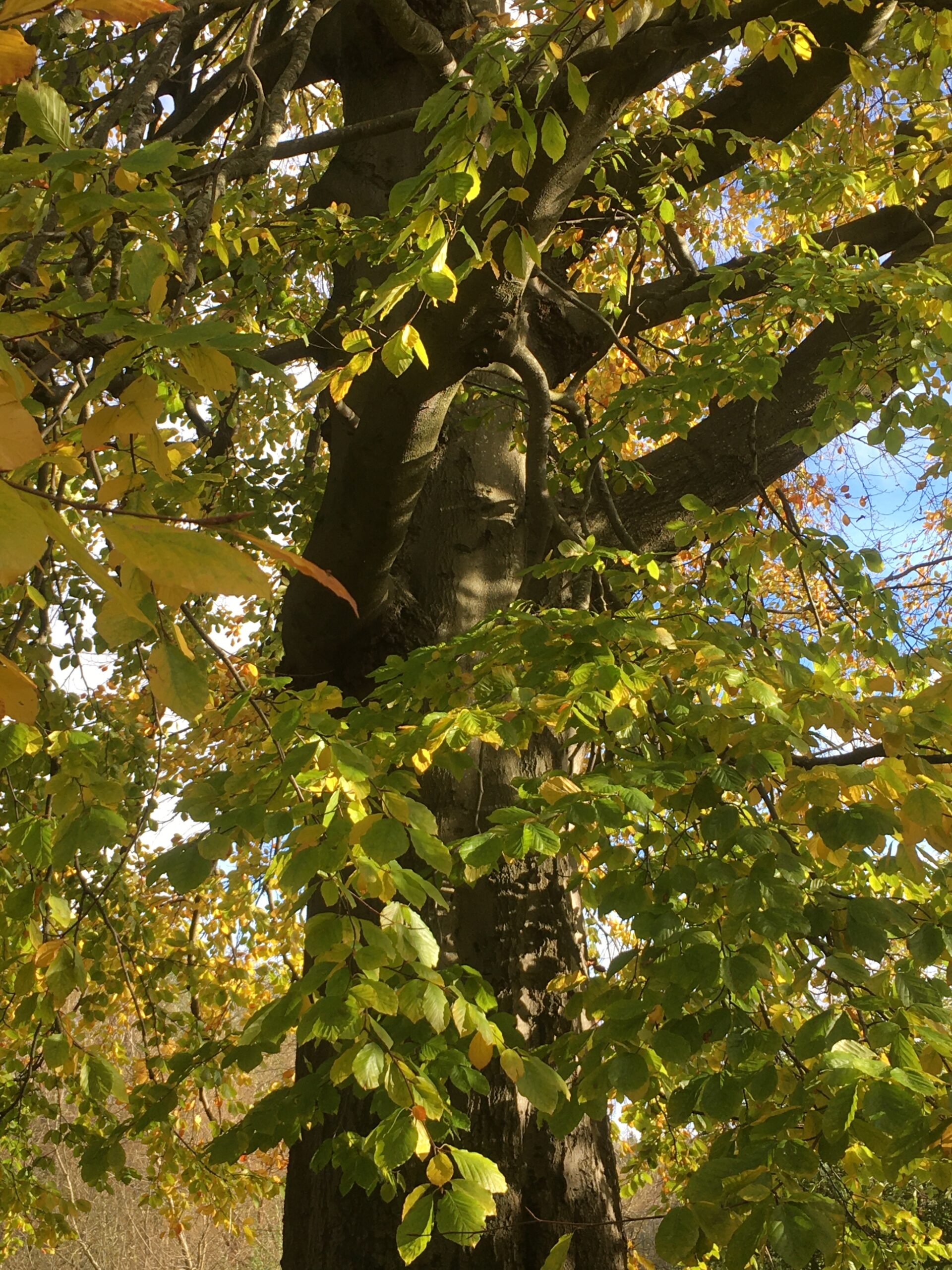
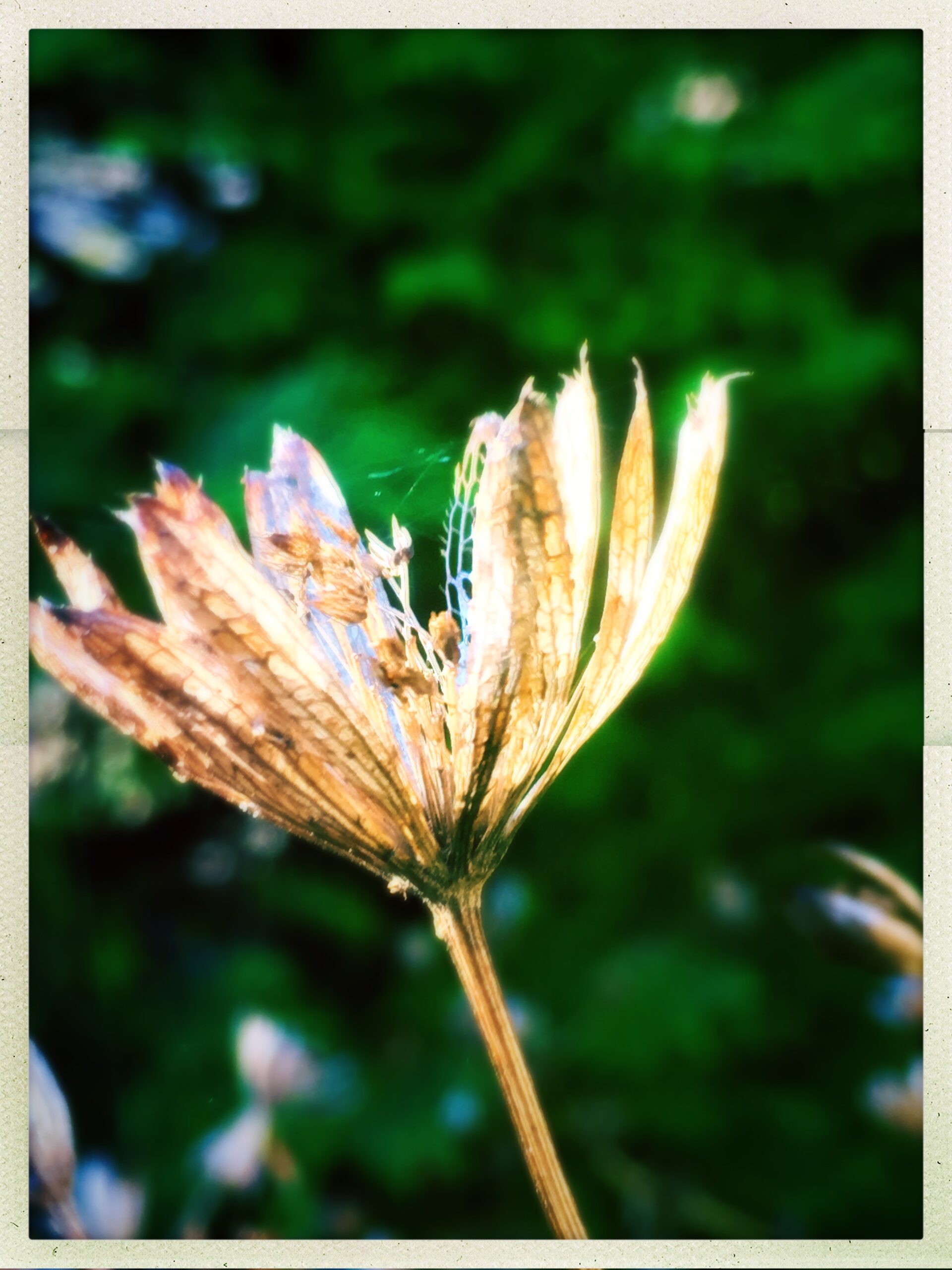
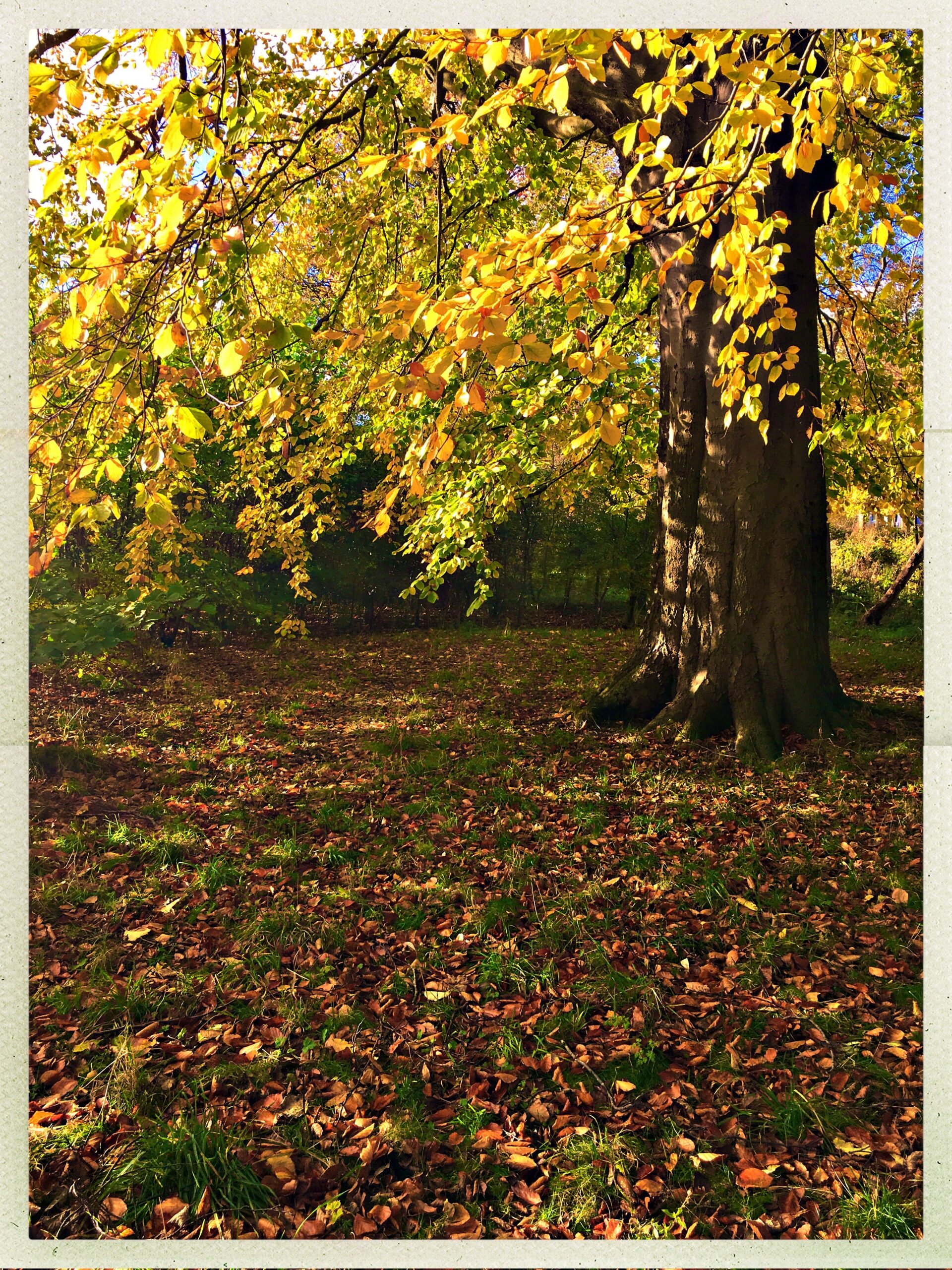
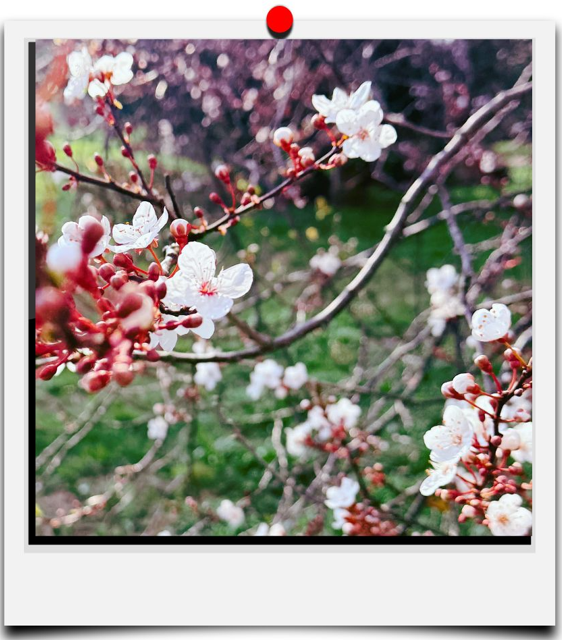
I love to be outside in nature and I usually have a wee notebook with me there to capture ideas from what I see. Here are a couple of examples.
Seeded Grasses and Daisies, September

Growth breaks free and will not rest
In motionless moments, held
Where colour binds the promise of new
A given, a glowing field

To touch with fingers stained by skies
Pass through blossoms and time
Walk in summer’s end and gather seeds
Thrown, sown without aim

Look into the eyes of autumn, yellow
Brown, the glue of silent gold
Where we, in time, will bloom and fall
In motionless moments, held


Chelidonize – to chirp like a swallow

The spring can come in its raincoats
With its whistle-bands and confetti
A tribute to our very existence – here
We are, survivors

And when the sky rips into stripes,
When it burns those lost days to ash
Then we can come together again
Tearing through the afternoon in weightless dances
Strangers to gravity
Squawling and screaming our freedom,
Landless and wild

When we can come together again
Swallow the tears and distil them to sungold
Chelidonize and dare the summer to join us
Here we are, survivors
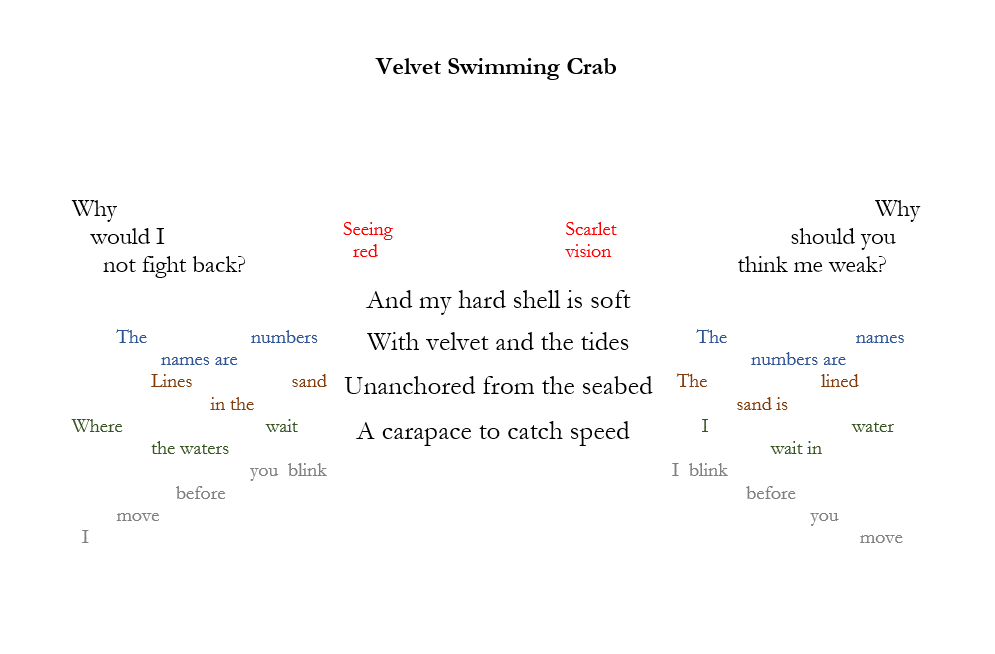
I created a poem for the Edinburgh Shoreline Project, celebrating the diverse species that call this part of the world home. I chose to write about a beautiful and feisty crustacean, the Velvet Swimming Crab. It has blood red eyes and, while its flesh is considered a delicacy by those who eat meat, it is also tricky to catch and singled out as being aggressive to humans. If someone was trying to eat me, I think I would be aggressive too. These crabs – as their name makes clear – also tend to move in a different way to that sideways tiptoe dance that is our stereotypical idea. They are swimmers. What wonderful animals.
Yer Other National Leid – Scots Language writing
Scotland has three official languages, although we all know how powerful is the grip of English on us all. Writing in Scots gives me another voice and the chance – sometimes – to say different things. Also, on a cultural and political level, it’s just good to use it.
The Scots Dictionary

The Scots Dictionary sat fir years oan the shelf,
The tartan dust jaicket a wee bit torn an stoor
Coverin the toap o they unopened pages
Auld, dyin, obsolete and nae use tae naebdy
Cuz why wid ye ever want tae keek inside that hing?
Ye werenae ever gauny get a test at schule
Ye werenae ever gauny need it fir yer holidays,
Orderin a cerveza or findin a platform fir yer train –
Whit wis the point o it onywey?
It wis like wan o they hings ye see twice a year,
At Hugmanay oan the telly; a month later
Wi a haggis an that proof that poetry
Cannae die – there’s wan hing we dae, eh?
A national figure that isnae a king or a conqueror
But a poet – aye, Scotland, ah’ll gie ye that wan
Still, ah’ve nae reason tae tak that torn an stoory book
Doon fae its shelf

Ah mind it, as a bairn, oan that unit in the corner
O the room, ornaments and photies in front o it
A childhood memory, when ah thocht it wis jist an
Ornament itsel, an no a guid wan, nuhin tae play wi,
Nae picters an nuhin o interest fir me
A relic fae anither time, ma faither’s domain
An ah kent there wis naewhere fir me there to build a free
An carefree space ah could cry ma ain

Ah hink it ended up in the chairity bag. They werenae bothered
Wi it either, in the end
A historical collection o thousands an thousands
O unsaid wurds
Empty cradle

Ah cannae find the wurds, mah wurds
Are gon, aborted wurds ah never hud
But jist like that bairn ah never kent
Ah imagine thum in ma dreams,
Clouds o wurds, crashin in a storm
Ower ma heid, sae stark an distant,
Like ah’m in ma ain green screen world
Wi a these wurds rainin doon on me
An landin on ma een, on ma fingers
Fa’in – some o thum – intae ma mooth
An lettin me swally thum doon
But they willnae stay, they cannae last

Somewhere in the background, there’s a
Bairn greetin and ah cannae find her, cannae find him – dinnae even ken
They’re a alane in that storm, cryin oot
Fir thur mammy, who’s lost hersel in that flood
O wurds, they wurds she couldnae ever say
An athing’s washed awa
An a they car alairums are blarin an
The fire brigade are oan thur wey
But the wurds and the bairns and the storms are swirlin
Swirlin me awake again

And here are all these English words
Filling the empty cradle
Rocking themselves to sleep
Flash Fiction
Want to read a story but short on time? Here are a couple of micro-stories for you.
This one was chosen by the Scottish Arts Trust to be published in their collection, “Life on the Margins”.
Feathers
The limestone split easily. Sometimes it didn’t even need the chisel and the hammer, but she liked the sound, so she used them anyway. Heat hummed, the spiders clambered over the rocks in the old quarry and Irma tapped, tapped away. She tapped away the time, trapped in its layers and left to fossilise. She could relate to that. It was good to liberate these lost remains and open them up to the light again: ammonites in need of emancipation. Maybe there would be a dropped feather, left by an archaeopteryx and drawn on to the stone.
Finding feathers meant the angels were with you. That’s what he’d said to her and she’d smiled when he did. They both knew she didn’t believe in any of that, but it didn’t matter.
A single red poppy bowed to a breeze Irma barely noticed against her skin. It was growing in the tracks left behind by one of the great machines, those monsters with claws strong enough to cut and carry huge hunks of marble and limestone slabs. They were gone now, too.
Everything just goes, she thought.
From a nearby beech, a jay flew across that moment and took the thought away. Irma followed the line of the flight, then watched a pink feather fall from its body, twirling slowly to land on a heap of cracked boulders.
Might as well.
The chisel found a groove. She hammered it apart. An archangel or an archaeopteryx stared back at her, released.
Finland is kind of a spiritual home for me, the place my favourite writer/artist – Tove Jansson – came from. This story has nothing to do with her, other than the location being her home city of Helsinki. This is based on an almost true story…
Risk Management
In Helsinki, people are expected to look where they are going. Their common sense is respected enough that there is seen to be no need for railings at the harbour’s edge.
Lara was not a Helsinki native.
She took her icy dip without prior sauna sweats and fully dressed, including those boots she’d paid too much for as a small reward for having to travel so far north for that stupid bloody conference. She had to throw them away. One of them even caught a herring, which added more colour to an already fabulous anecdote, but Lara wasn’t going to share it with anyone. Obviously.
Erica wasn’t from Helsinki either, but she knew that an extra step backwards when taking a selfie is an invitation for disaster. She did, in fact, catch Lara’s phone somehow, which was lucky for Lara. Not that she would say thanks. Assistants were to not paid to be thanked.
When they fished her out, Erica turned away and allowed herself the smallest laugh, before organising a taxi back to the hotel.
She missed the first day of the conference, but then it was only on Risk Management, which felt too ironic to face, even for Lara.
Erica sat later with her coffee, smiling. When she’d caught the phone, the camera was still open at that last selfie: an open-mouthed Lara, stepping back into midair. It would have been a shame not to have taken a picture of that picture. Treasure from the sea.